Comments
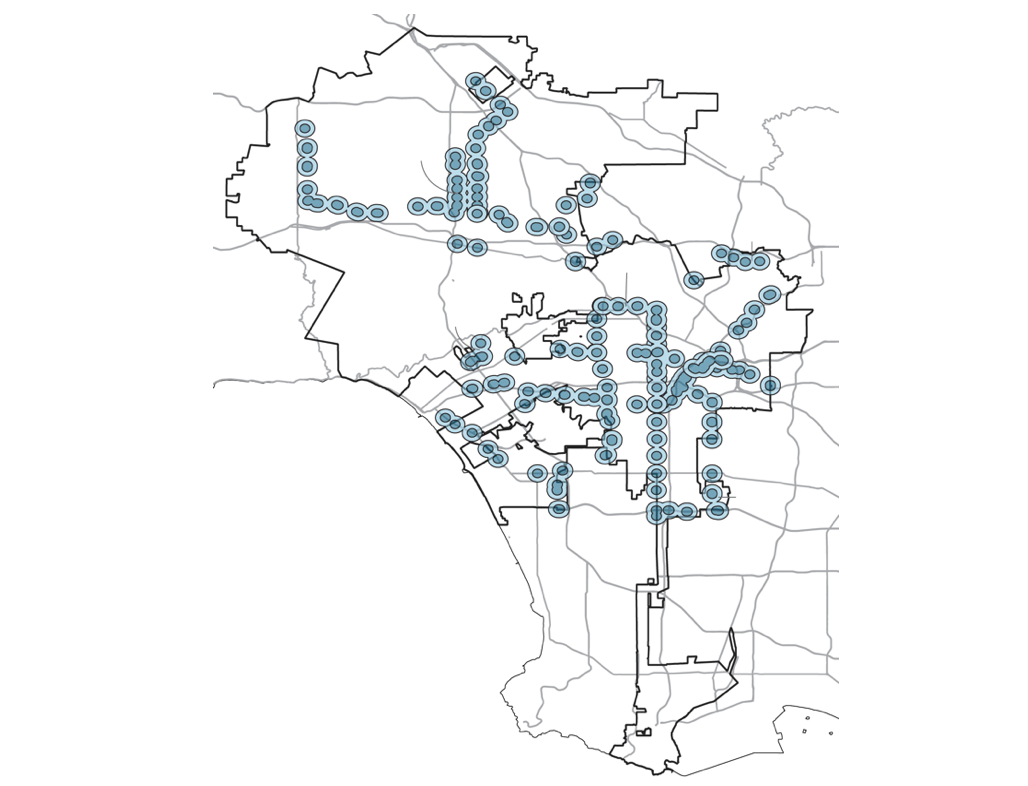
Map of California Senate Bill 79 upzoning corridors in Los Angeles.
Blue dots would permit tall new apartment buildings.
In the Los Angeles metropolitan area there are over 72,000 homeless people and 1,000,000 residents living in overcrowded conditions, the highest rates in the entire United States. At the same time, there are tens of thousands of vacant units in LA. For Rent signs are posted on existing apartment buildings throughout the entire metropolitan area.
Despite these obvious facts, local elected officials and their media echo chamber, follow California State Senator Scott Wiener. They repeatedly tells us that California, including LA, have a housing shortage that can only be met by SB 79’s imposed widescale up-zoning.
It is hard to believe that both situations, thousands of vacant units and the need for new zoning to allow tall apartment buildings, are both true.
Senate Bill 79 is a new sweeping California law. It requires cities to upzone properties near major transit corridors, allowing apartments between four and nine stories. Los Angeles aggressively opposed the law and delayed its citywide rollout until 2030 by adopting a local alternative plan.
There is an obvious refutation for SB 79’s underlying premise that greater LA’s housing solution is to build new apartment buildings. Homeless people and the overcrowded are too poor to rent or buy existing or new housing. The claim that the homeless and overcrowded prefer to live on sidewalks or in cramped conditions is simply not true.
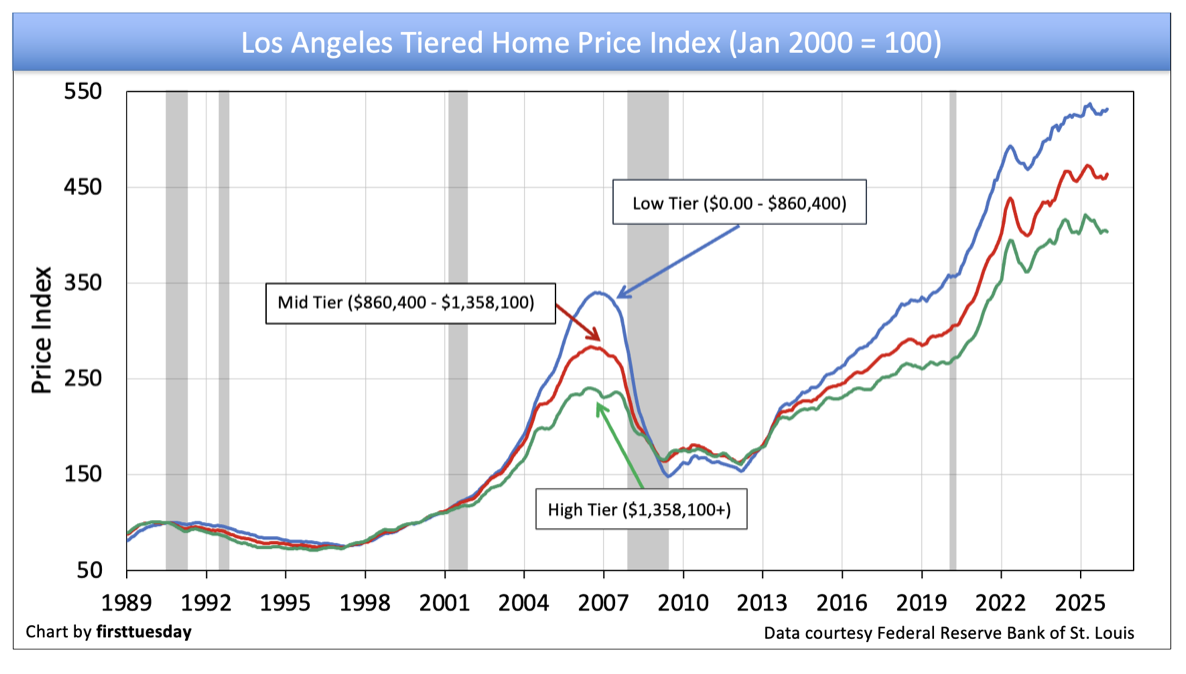
The growth of homelessness and overcrowding is a product of public policy, not personal circumstances. In response to rising rents and property values, homelessness and overcrowding has substantially increased. Personal preferences are not the problem, but the rising cost of housing. From 2013 to date, controlling for inflation, the price of low-priced housing has increased nearly 400 percent in Los Angeles. This, not inadequate supply, explains the growth of homelessness and overcrowding.
What can be done to reverse these trends in Los Angeles? The housing situation for low-income people in Los Angeles is dire, with no meaningful relief in sight. Yet, there are solutions which could make a major difference. The easiest solution is the restoration of Federal public housing programs. They began during the New Deal in the 1930s, but were phased out in the early 1970s by the Nixon Administration, with eventual support from Congressional Democrats. While there are calls from housing experts for restoring these Federal housing programs, this is not nearly enough for the homeless and overcrowded.
Plus there are local proposals which could make a difference, such as the elimination of rezoning initiatives, such as SB 79. Then, cities must step up to the plate with their own housing programs, but they, too, are not enough. The result is the gradual growth of homelessness and overcrowding.
Since national and local solutions are extremely unlikely, homelessness and overcrowding will get worse in the Los Angeles area, oblivious to the economic stimulus of the 2026 World Cup and 2028 Olympics. Because the police and sheriff have rising budgets, neighbors will contact them, but they can only move homeless and overcrowded people to other locations, not fund and build public housing or provide financial assistance to the homeless and overcrowded so they can afford permanent housing.
(Dick Platkin is a retired Los Angeles city planner who writes about planning issues in LA. He is a board member of United Neighborhoods for Los Angeles (UN4LA). Previous columns are available at the CityWatchLA archives. Please send questions to rhplatkin@gmail.com.)