Comments
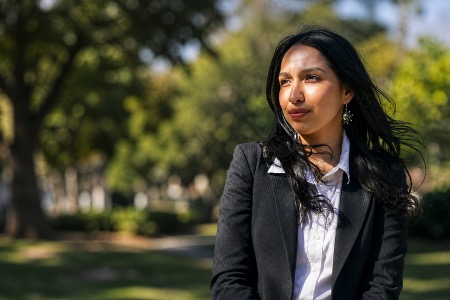
EASTSIDER — Campaign season has a way of polishing résumés. That’s nothing new. But as Angela Gonzales-Torres steps forward as a candidate for California’s 34th Congressional District, some in Highland Park are taking a closer look at how her story lines up with what they remember.
Angela Gonzales-Torres presents herself as a community advocate shaped by hardship—growing up in Section 8 housing, working with students at Pasadena City College, and helping guide vulnerable residents toward stability. It’s a compelling narrative, and one that resonates.
But here’s where the conversation in Highland Park starts to shift.
Gonzales-Torres often points to her time as president of the Historic Highland Park Neighborhood Council as proof of her leadership—navigating bureaucracy, building coalitions, and addressing issues like housing displacement and public safety. That’s the campaign version.
From my experience attending meetings during that time—and from conversations with others who were there—the day-to-day reality felt different. Participation could be inconsistent. Meetings were sometimes marked by procedural disputes. And the kind of steady, visible leadership now being described wasn’t always apparent to those in the room.
That doesn’t mean nothing was accomplished. But it does raise a fair question: how closely does the campaign narrative match the record residents actually observed?
There are also questions about how some current roles are being described. Gonzales-Torres has referenced work in both education and housing services, but specific program details are not always clearly outlined in public materials. For voters trying to evaluate experience, clarity matters.
Then there’s the issue of policy positioning.
Angela Gonzales-Torres has been outspoken about gentrification and critical of certain types of new business development in Highland Park, including those tied to alcohol sales. That position has its supporters. But some residents have questioned how those views align with the broader range of professional and community affiliations attributed to her. Again, it’s less about accusation and more about consistency—something voters tend to notice.
And in Highland Park, memory runs deep.
Longtime residents remember a different era—when North Figueroa was lined with local institutions that defined the neighborhood for decades. The story of change here didn’t start recently, and it isn’t simple. So when candidates speak about the community’s past and present, people listen closely—not just to what’s said, but to what’s understood.
Gonzales-Torres has also been active in broader political demonstrations, including recent protests tied to national and international issues. For some voters, that reflects engagement and conviction. For others, it raises questions about priorities and approach. As with much in today’s politics, interpretation depends on where you stand.
But this much is clear: in a race like this, biography alone won’t carry the day.
Voters in the 34th District are being asked to look beyond the headline version of a candidate’s story and decide for themselves what reflects lived experience, what reflects political messaging—and where the two may not fully align.
That’s not an attack. It’s the job of the voter.
And in Highland Park, people tend to remember.
Justice democrats endorse Angela Gonzales-Torres
Angela regarding Highland Park doesn’t need liquor licenses.
Former Higland Park NC President, Forever NELA, Angela Gonzales-Torres re Changing Neighborhoods
Testing the Limits of the Neighborhood Council System at the Highland Park NC by Tony Butka
(Tony Butka is a veteran Eastside community activist with decades of experience in Los Angeles civic life. He has served on a neighborhood council and worked extensively within local government, bringing deep knowledge of policy, budgeting, and urban planning to his advocacy. As a regular contributor to CityWatchLA, Butka offers sharp commentary on city politics, development, and grassroots issues. His writing reflects a commitment to transparency, accountability, and amplifying the voices of historically underserved communities.)