Comments
THE BOTTOM LINE -
Los Angeles residents have seen this story before.
When the Palisades Fire erupted in January 2025, Mayor Karen Bass faced intense criticism for being overseas in Ghana while one of the most significant disasters in the city's recent history unfolded. The controversy became a defining moment of her administration, raising questions about leadership, priorities, and crisis management.
Now, another major fire has placed those questions back in the spotlight.
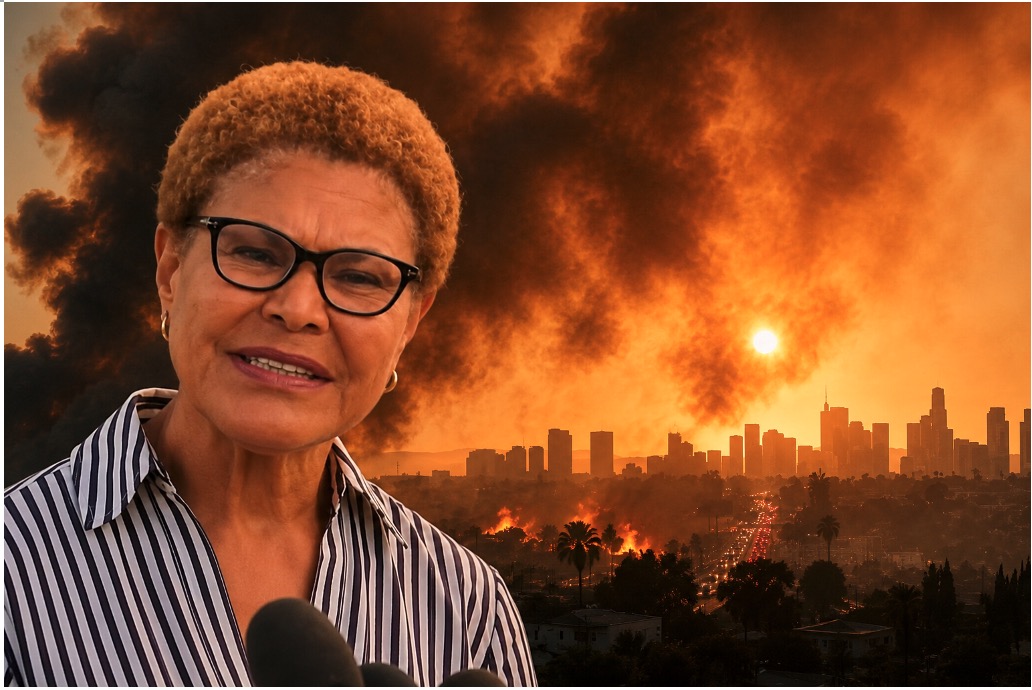
As a massive warehouse fire in Boyle Heights sent thick black smoke across the Los Angeles region, images of the blaze quickly spread throughout Southern California and beyond. Smoke drifted across the skyline, creating concerns for residents, businesses, and visitors alike. The incident became visible far beyond the immediate area of the fire, drawing regional and national attention.
The fire occurred at a Lineage Logistics cold-storage facility, one of the largest operations of its kind in the country. Authorities have indicated that millions of pounds of stored food may ultimately be lost because of the damage. Firefighters have faced extraordinary challenges battling the blaze, which reportedly involved rooftop solar infrastructure that can complicate firefighting efforts because energized systems may continue to pose risks even during active suppression.
What makes the incident especially concerning is that this facility had experienced a significant fire before. The possibility that similar vulnerabilities may have existed raises important questions about preparedness, prevention, and oversight.
Mayor Bass has since participated in public briefings and has received updates on the emergency response. Yet many Angelenos are once again asking a familiar question: Why was the mayor out of town while Los Angeles was confronting another major crisis?
At the time, Bass was attending events in Chicago connected to the opening of former President Barack Obama's presidential center. Supporters may argue that such appearances are part of a mayor's responsibilities and help strengthen relationships with national leaders. Critics see it differently. They view the trip as another example of political obligations taking precedence over local concerns during a critical moment.
Fair or not, perception matters in politics.
Leadership is not judged solely by decisions made after a crisis begins. It is also judged by presence. Residents want to know that when their city faces an emergency, their mayor is on the ground, visible, engaged, and focused entirely on the challenges at hand.
The Boyle Heights fire may ultimately be contained, and investigations will determine exactly what went wrong and whether it could have been prevented. But politically, the incident has already revived a debate that many believed had been settled after the Palisades Fire.
The issue is larger than a single trip or a single fire. It is about confidence. It is about whether residents believe City Hall is fully focused on the problems affecting their neighborhoods. It is about whether voters feel their leaders share the same sense of urgency they experience when disaster strikes.
These concerns help explain why voters across the political spectrum continue searching for alternatives. They help explain the growing frustration with government institutions and the increasing willingness of voters to support candidates who promise a different approach.
For Mayor Bass, the lesson should be clear.
When Los Angeles faces a major emergency, residents expect their mayor to be in Los Angeles.
Not because appearances alone solve problems.
But because leadership begins with showing up.
And once again, many Angelenos are left wondering why their mayor was somewhere else when the city needed reassurance, visibility, and leadership the most.
(Mihran Kalaydjian brings over two decades of experience in public affairs, government relations, legislative policy, and strategic communications. A respected community leader and education advocate, he is deeply engaged in civic activism and has spearheaded numerous academic initiatives across local political forums. Mihran is a regular contributor to CityWatchLA.com, where he writes on education, civic engagement, and policy issues.)